A book by Dr Kostas Pisios, MD
When ordinary life starts costing more.
Decline rarely announces itself. It arrives as effort — the same day, the same work, the same evening, quietly asking more of you than it used to.
The Quiet Decline is about the years before anything shows up on a test: what reserve is, how it drains, and how to notice it while noticing still changes the outcome.
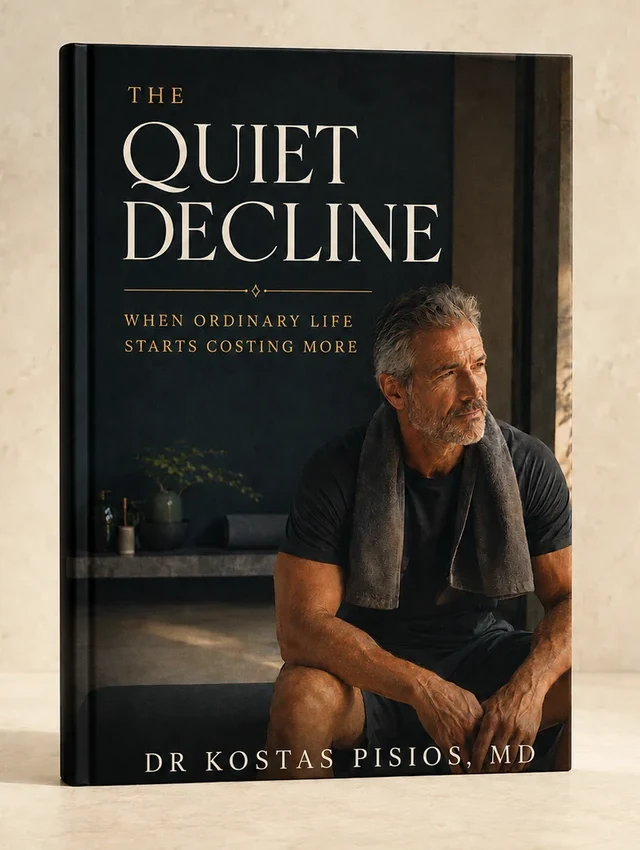
Early signals
The signals that arrive first.
Long before a result changes, four things tend to shift. None of them is dramatic. All of them are noticeable, if anyone is looking.

01
Ordinary tasks start asking more
The stairs, the inbox, the second half of the afternoon. Nothing is beyond you. Everything simply takes a little more of you than it did a year ago.

02
Recovery takes longer than the effort
You still train, still travel, still show up. What changes is the time it takes to feel like yourself again afterwards — and how rarely you mention it.

03
The mind has less room in it
Focus narrows, patience thins, decisions get postponed. It is not a memory problem. It is a reserve problem, and reserve is what runs down first.

04
Life quietly rearranges itself
The late dinner is declined, the trip is shortened, the weekend is protected. You call it preference. Often it is adaptation, made one small choice at a time.

Before the numbers move
What can disappear before performance does?
High performers are the last people to notice, because output is the last thing to go. The work still lands. The meetings still happen. What has already changed is everything that was paying for them.
Reserve — the margin you used to have at the end of a long day.
Recovery — how quickly effort stops costing you something.
Steadiness — sleep, appetite and mood holding their shape under pressure.
Appetite for the extra — the trip, the dinner, the second conversation.
Educational wellness insights only. Not intended to diagnose, treat, cure or prevent disease, and not a replacement for professional medical care.
Free companion
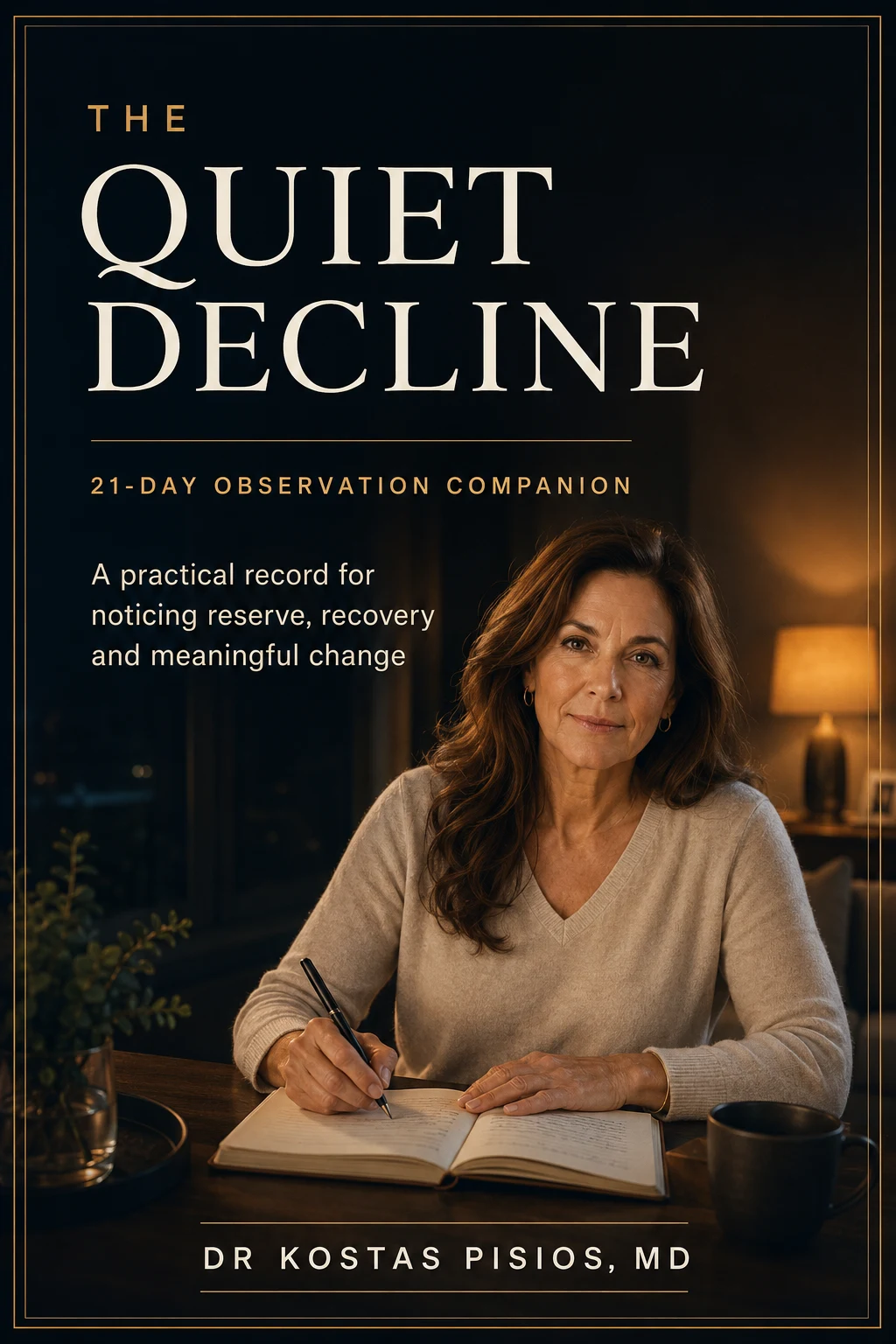
Twenty-one days of noticing.
The 21-Day Observation Companion turns the book into a record. Three weeks of short, honest entries on reserve, recovery and what actually changed — enough to see a direction instead of a mood.
No score to chase and nothing to keep up with. A few minutes a day, and at the end of it, something you can read back.
The connected library
Three books, one question.
The Quiet Decline sits between what a reset gives you and what keeps it. Each book answers a different part of the same question: how is your wellbeing actually changing?

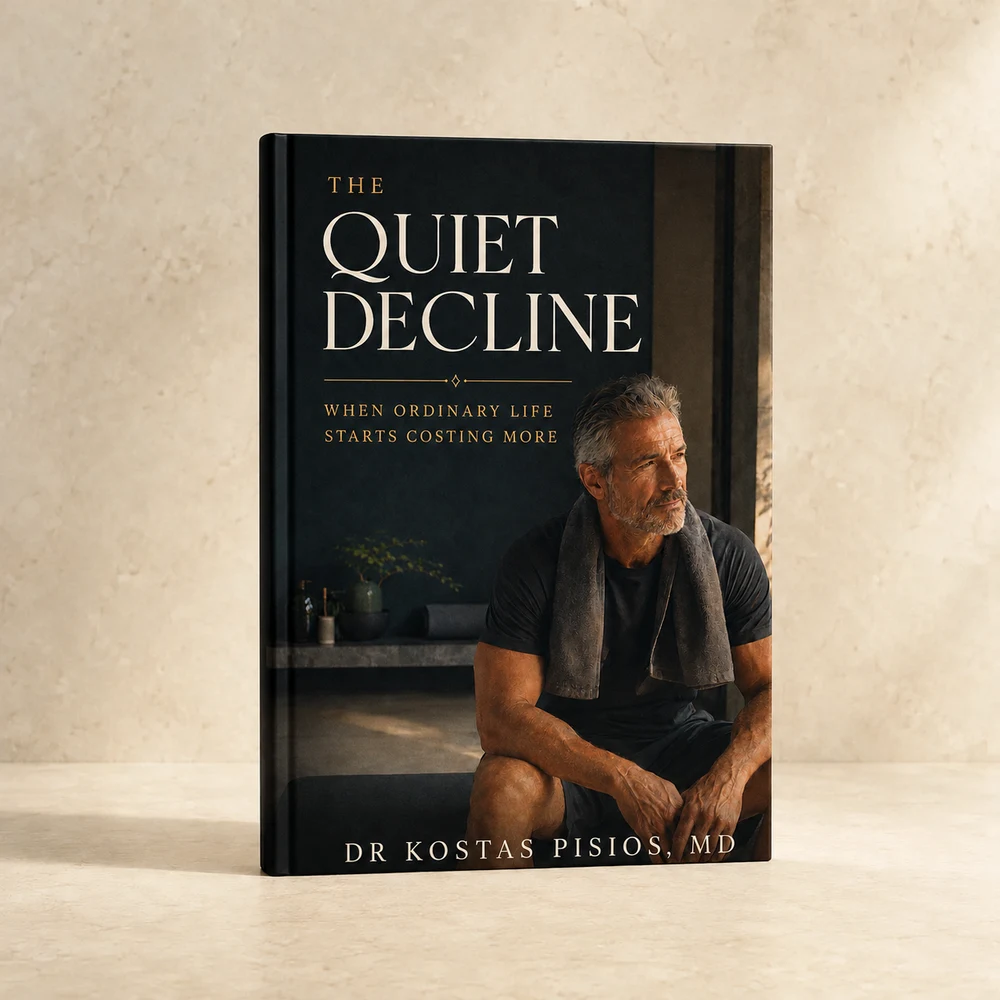

To follow
Longevity Secrets
From how wellness comes to you.
Start with three weeks of attention.
The book explains the pattern. The companion is how you find out whether it is yours. It is free, and it takes a few minutes a day.
Educational wellness insights only. Longivy is not intended to diagnose, treat, cure or prevent disease and does not replace professional medical care.